
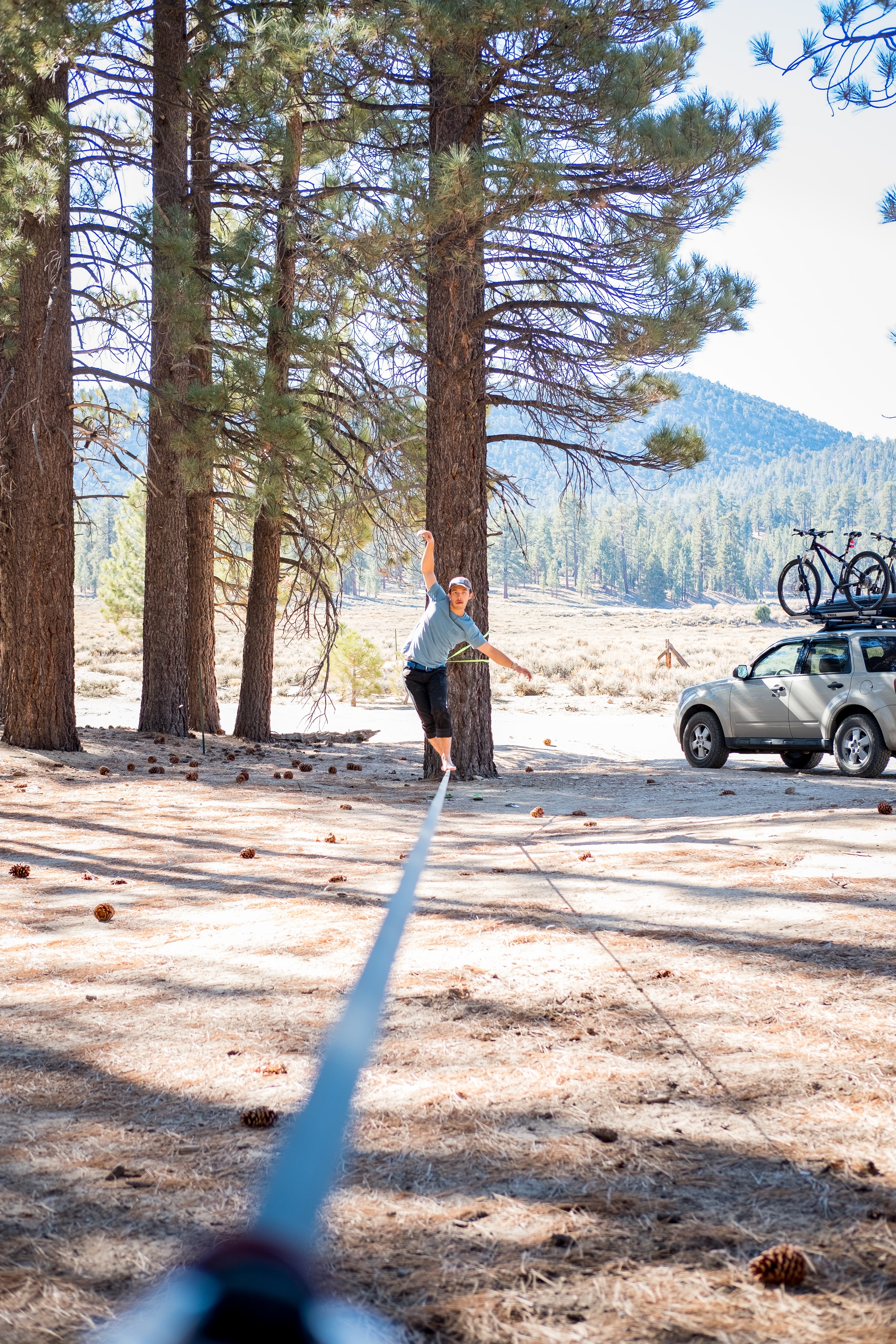

Slacklining is a fantastic outdoor activity and exercise. It’s a great way to relax with friends and challenge yourself to try something unique and learn a new skill. Interested in learning more about slacklining? You came to the right place. We’ll cover everything you need to know from the history of slacklining to the type of slacklines available.
Origins of the Slackline
People have been looking for new ways to challenge themselves since the beginning of time and slacklining is no different! While people have been walking on tightropes for centuries, the origins of slacklining are more recent.
Most people attribute the invention of slacklining to Adam Groswsky Adam was a sixteen-year-old rock climber from southern Illinois who got bored while relaxing at his camp. He and a friend named Jeff Ellington grabbed some nylon straps from their climbing gear, attached them to two trees, and tried to balance on them. And just like that, slacklining was born!
Since then, slacklining has expanded into a national sport with competitions taking place all around the world. The advent of beginner-friendly slacklining kits in recent years has caused the sport to be adopted in mainstream circles.
What is Slacklining?

Slackling is the art of balancing on a strap made of synthetic fibers that is fastened to a fixed point at each end. Slacklining is a diverse sport that encompasses many variations and styles depending on the type of strap (or “line”) being used and the techniques used by the slackliner while balancing on the line.
Not only is slacklining a stand-alone competitive sport but it’s also used during balance training and physical therapy. However, it’s most popular in recreational circles and those who participate in the sport for fun or relaxation.
Slacklines vs Tighroping?
While slacklining and tightrope walking are very similar, they have some major differences.
First, tightrope walking normally uses a very tight rope or steel cables (hence the name). However, slacklining uses a relatively loose (or slack) that will give a stretch under load. The result is that a slackline is much more dynamic and more difficult to balance on.
Second, tightrope walking is usually associated with circuses and performances. However, slacklining has its roots deep in the mountain climbing and outdoor adventure camp.
Slacklining Techniques
Slacklining can be subdivided into several categories and we’ve outlined the most popular categories below. The unique categories of slacklining can be divided based on the type and length of slackline being used and the style or techniques used by the slackliner while balancing on the line.
Highlining

Highlining is what most people think of when they hear the term slacklining. It involves great heights and generally, the line is suspended between two peaks or valleys.
Because of the height involved, a small mistake can be the difference between life and death. Most highliners use extra precautions and often run a second back line with a safety harness that attaches to both lines. However, some daredevils have been known to highline with no safety gear or harness and quite literally put their life on the line. Popular locations for hardcore highline walkers include Yosemite national park.
Tricklining
Tricklining is usually done on a short 8-10 meter-long line that is very flexible and elastic. This gives the line a lot of bounce, almost like a thin slice of a trampoline.
Trickliners are known for doing incredible jumps, summersaults, and aerial flips, all while maintaining their balance on the line. Tricklining is one of the most popular segments of the sport and trickline competitions are held all around the world.
Urbanlining
Urbanlining is any form of slacklining that takes place in a urban environment. Instead of fastening the ends of the line to trees or posts, the line is usually fasted to buildings or structures in city parks.
Rodeolining
In this variation of slacklining, the line is anchored very loosely with virtually no tension placed on it. Often the middle of the line will sag 2-3 meters lower than the anchor points. This sag makes it impossible to walk from one end of the line to the other and rodeo lines often stay towards the middle of the line while performing tricks.
Rodeolining is one of the most difficult styles of slacklining to master and is a great way to hone your skills.
Longlining
As the name suggests, longlinig uses an extremely long slackline usually over 30 meters in length. The longer the line, the more vibrations and wobble are introduced and the more difficult it becomes to maintain balance. Because of this, longlining is usually reserved for more advanced slackliners with the longline coming in at 600 meters!
Waterlining
Waterlining is any form of slacklining that takes place over water. It’s a great way to add another level of fun to the sport, especially in the summer months!
Types of Slacklines
There are different types of lines that work best for different styles of slacklining.
Slackline Length
The most obvious difference between the two types of slacklines is the length. Slacklines can vary in length from 8 meters to 500 meters!
Shorter lines are generally less expensive and easier to balance on than longer lines. Because of this, most beginner slackline kits come with a shorter line. Also, lines meant for tricklining (or tricklines) are often relatively short so they can provide a stiff, elastic feel when under load. More advanced slackliners may prefer a longer line, which opens up the door to things like longlining and highlining.
Slackline Width
Slacklines come in a variety of widths ranging from 2.5 cm to 5 cm. Contrary to what most people think, a wider line is not easier to balance on than a thin line. In fact, the choice of line width often comes down to personal preference.
Wide lines are ideal for beginners and trickliners because they are easier to feel underfoot and offer maximum shock absorbtion for landing tricks. On the other hand, narrower slacklines are often easier to handle and provide a better grip for highlining and longlining.
Slackline Material
Slacklines are most often made of nylon or polyester material. Nylon is very stretching and elastic, which makes it ideal for tricklining. Polyester, on the other hand, is very stiff and does not stretch much under load. This makes it the perfect choice for longlines or anyone looking for a stiff, taught feel to the line.
What is Slacklining: Wrapping it up
From its humble beginning in a climbing camp, slacklining has risen to a major competitive sport that is practiced worldwide. Although there are many styles of slacklining they all boil down to balancing on a strap made of synthetic fibers that are fastened to a fixed point at each end.
We hoped you found this article helpful! Be sure to check out some of our other outdoor articles at RemixOutdoors.com.


